TORRANCE, Calif. — As artificial intelligence changes how people learn and work, El Camino College is bringing faculty, staff, administrators and trustees together to guide its use across campus. The college’s approach emphasizes responsible governance, professional development and the principle that AI should support human expertise and judgment.
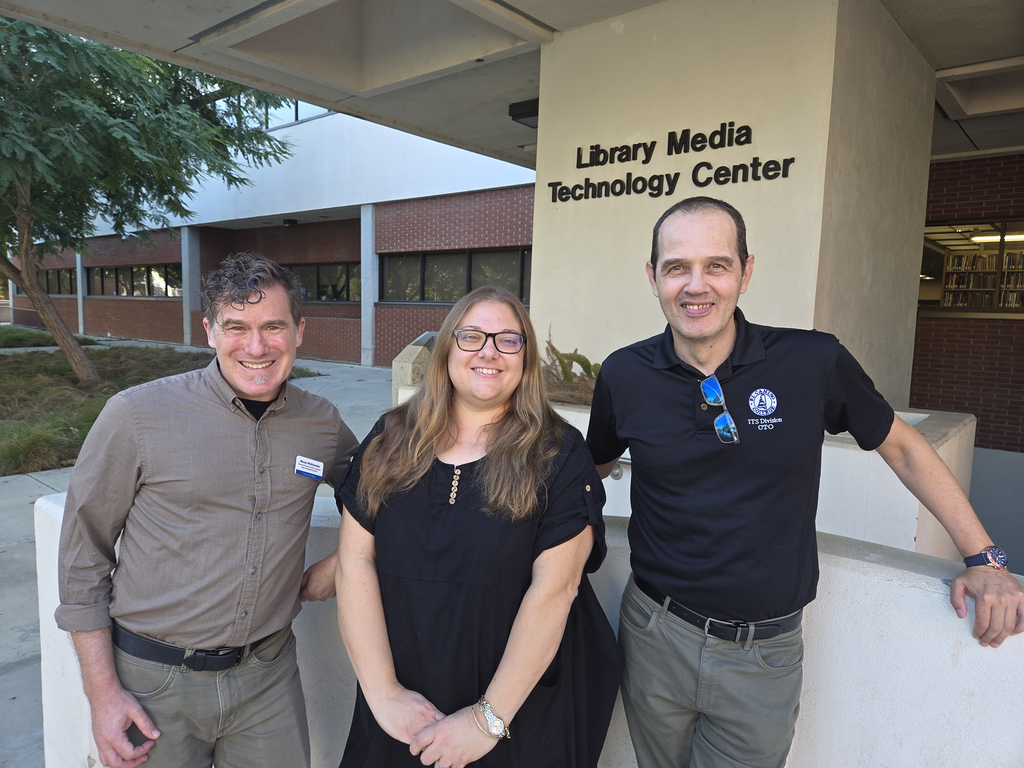
El Camino shared its work with higher education leaders at the Association of Community College Trustees (ACCT) 2026 Leadership Congress in Chicago. On October 22, Chief Technology Officer Loïc Audusseau, English faculty member Stephanie Burnham and Distance Education Faculty Coordinator Dr. Moses Wolfenstein presented “Governing AI Before It Governs You: Building Role-Based AI Fluency Across a Community College.”
El Camino College District Board of Trustees’ Area 3 Trustee and Board Vice President Trisha Murakawa helped develop the presentation and its trustee perspective.
“AI is already influencing decisions across higher education, from the classroom to the boardroom,” Audusseau said. “Our responsibility is to bring people into that conversation, give them the knowledge to ask the right questions and make sure decisions remain accountable to the people and communities we serve.”
The presentation explored how colleges can establish oversight, involve faculty and employees in shaping AI use, and prepare people for the opportunities and responsibilities relevant to their roles. It also addressed the importance of considering privacy, equity, academic practice and workforce implications as institutions evaluate AI tools.
“Faculty need a meaningful voice in how AI is used in education because its effects differ by discipline and classroom, and it touches every aspect of our job,” Burnham said. “These conversations should make room for professional judgment, academic purview, and the needs of our students.”
During the faculty portion of the presentation, Burnham and Wolfenstein discussed how instructors experience AI differently in their roles as employees and educators, and why faculty participation is essential in shaping the college’s response.
“Large Language Model AI has fundamentally changed the conditions for teaching and learning,” Wolfenstein said. “At El Camino, faculty have worked to surface the challenges and opportunities they’ve experienced as a result, and use that lived experience to help inform the approach the whole campus is taking through shared governance.”
A central part of El Camino’s work is its AI Fluency Professional Development Framework, which recognizes that trustees, administrators, faculty and classified professionals have different responsibilities and need different kinds of preparation. The framework connects foundational AI literacy with role-specific learning and practical applications, helping participants evaluate AI tools and use them responsibly in their work.
The college is also exploring ways AI can support services, improve access to information and reduce time spent on routine tasks, while preserving human oversight and the personal connections central to student success.
To make information and learning opportunities accessible, El Camino has established an AI resource website at ai.elcamino.edu. The site brings together information about the college’s AI initiatives, responsible use and professional development.
“We want our campus community to have a place to learn, ask questions and find resources that are relevant to their work,” Audusseau said. “Our goal is to help people use AI thoughtfully in ways that strengthen their expertise and support the college’s mission.”
At the ACCT conference, the El Camino team also shared a Governing AI Toolkit with resources other colleges can adapt, including a risk classification guide, a Board AI initiative review form and materials from El Camino’s AI fluency framework.